
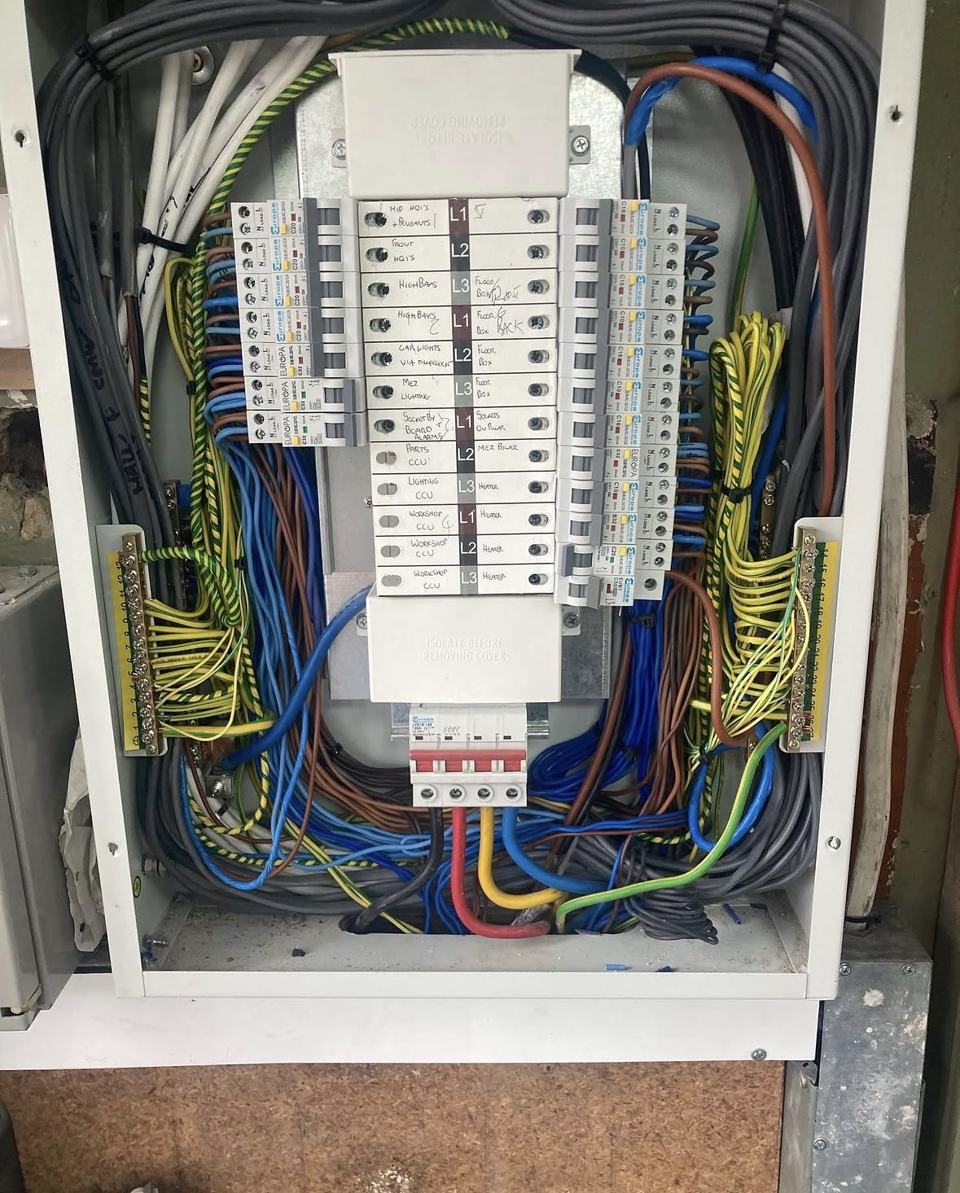
Full and partial rewiring
What rewiring involves
Rewiring replaces or extends fixed electrical cables, circuits and accessories within a property. The scope can cover the whole installation or selected areas such as an extension, kitchen, loft conversion or refurbished floor.
Who may need rewiring
Rewiring is often considered when a property has ageing wiring, repeated faults, extensive planned alterations or too few suitable circuits and outlets for current use. Builders and homeowners can also arrange first-fix and second-fix electrical work as part of a wider project.
Common signs and project needs
- Old, damaged or unsuitable fixed wiring
- Major renovation or extension work
- Insufficient sockets, lighting points or dedicated circuits
- Electrical findings that cannot be resolved with limited repairs
Benefits of planning early
Early electrical planning helps position sockets, switches, lighting and dedicated supplies before finishes are installed. It also allows the work to be coordinated with builders and other trades, reducing avoidable changes later.
Rewiring FAQs
What is the difference between a full and partial rewire?
A full rewire covers the main fixed electrical installation, while a partial rewire targets defined rooms, circuits or project areas.
Can a property remain occupied?
That depends on the scope, access and condition of the property. Disruption, power isolation and sequencing should be discussed before work starts.
When should the electrician be involved in a renovation?
As early as possible. Electrical requirements affect layouts, finishes and coordination with other trades.